What Small Businesses Need to Know about AI and SEO in 2026 | Module 7.1
AI Assistants speeds up drafting, sparks ideas, and ensures consistency but it can’t replace human insight. Learn where AI helps, where it fails, and how small businesses can adapt with AEO and GEO strategies for 2025.
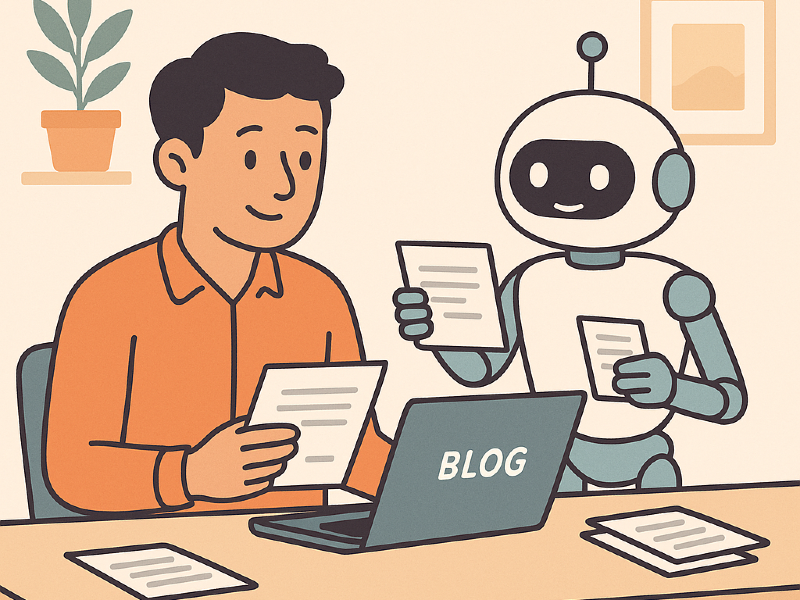
Artificial intelligence is no longer experimental in marketing. For many small businesses, tools such as ChatGPT are now used for blog drafts, social posts, outlines, and content planning. The efficiency gains are real, especially for teams with limited time or budget.
At the same time, business owners still worry about one thing. Will AI-written content damage search rankings?
The answer is straightforward. AI does not harm SEO when it is used properly. Problems arise when content is published without review, insight, or accountability. This is not a Quick Win but a look at how search engines treat AI content heading into 2026, where AI tools are genuinely useful, and how to combine them with modern optimisation methods that protect visibility.
How Search Engines View AI Content Going into 2026
Search engines still work towards the same objective. They want to show the most useful, relevant, and trustworthy results for each query. Content is judged on quality, not on whether a human or a machine produced the first draft.
However, recent changes have reshaped how content competes.
AI-generated summaries and answer panels now appear more often at the top of results. These features can reduce clicks to websites, especially for basic informational searches. As a result, businesses must work harder to earn visibility beyond simple definitions.
Quality guidelines have also tightened. Content that looks generic, repetitive, or clearly unedited is more likely to be filtered out. Search quality systems increasingly reward pages that show first-hand experience, subject expertise, and clear accountability.
This is where many AI-only articles fail. They may read smoothly, but they lack proof of knowledge, originality, or real-world context.
Where AI Tools Add Value and Where They Do Not
AI can be extremely helpful when used with intention. It performs well when speeding up early drafts, organising ideas, and creating consistent structure across multiple pages. It is also useful for brainstorming angles, summarising long notes, and identifying related topics that support a main keyword.
Where it struggles is just as important to understand.
AI does not bring original insight. It relies on existing information and patterns, which means it often repeats what is already widely published. It can also present outdated or incorrect facts with confidence. Local detail, brand tone, and industry nuance usually need human input to feel credible.
For small businesses, this means AI should assist, not lead.
Does AI Content Harm SEO?
AI content on its own is not a ranking problem. Search engines do not penalise content simply because a tool helped produce it.
SEO performance drops when content is thin, repetitive, inaccurate, or clearly written to fill space rather than help users. These issues are common in unedited AI drafts, but they are not caused by AI itself. They are caused by poor publishing standards.
When content is reviewed, improved, and grounded in real expertise, AI can be part of a sustainable SEO workflow.
Best Practices for Using AI Safely and Effectively
To use AI without risking rankings, small businesses should focus on editorial control.
Add genuine insight wherever possible. This might include customer examples, lessons learned, or commentary based on experience. Shape keywords naturally so pages read for people first. Use headings and short paragraphs to improve clarity and scanning.
Tone matters as well. Editing for voice, clarity, and confidence makes a noticeable difference. Every factual claim should be checked, especially statistics, dates, and technical advice. Citing reliable sources and updating older pages regularly helps reinforce trust.
AI can save time, but authority still comes from human judgement.
Beyond the Basics: Preparing for AEO and GEO
Traditional SEO is no longer enough on its own. Small businesses need to account for how AI-driven search systems extract and present information.
Answer Engine Optimisation focuses on writing clear, direct responses to specific questions. Well-structured answers increase the chance of being referenced in AI summaries, voice search, and featured snippets. However, AEO is no longer effective as a standalone tactic. Modern search systems evaluate answers within their wider context, including supporting explanations, topical depth, and signals of experience and trust. Clear answers still matter, but they must sit within authoritative, well-structured content that demonstrates subject knowledge rather than isolated question-and-answer blocks.
Generative Engine Optimisation (GEO) focuses on structuring content so AI systems can accurately understand, extract, and summarise it. This means writing in clear, factual sections with consistent terminology, simple explanations, and logically ordered information. GEO favours content that reduces ambiguity, avoids speculation, and is easy for generative models to reference without misrepresenting the original meaning. For small businesses, this involves creating concise definitions, step-by-step guidance, and clearly separated content blocks that AI systems can safely reuse in summaries, overviews, and conversational search results
Businesses that adapt their content for these formats are more likely to remain visible, even when fewer users click through to full articles.
Final Thoughts
AI is not a shortcut to better rankings. It is a productivity tool that works best when paired with experience, editing, and accountability.
For small businesses, the opportunity lies in using AI to publish more consistently, while raising quality rather than lowering it. Those who focus on clarity, usefulness, and trust will continue to perform well as search evolves.
Action step: Review your three most recent blog posts. Choose one and improve its structure, add a real example or insight, and rewrite the meta description with clarity in mind. Monitor performance over the next few weeks and compare results.
Frequently Asked Questions
How much AI-generated content is too much?
There is no fixed limit. What matters is whether content is accurate, useful, and clearly reviewed by a human. Pages where AI assists with structure or drafting, but final decisions are made by a knowledgeable editor, tend to perform far better than fully automated output.
Is it safe to publish AI-written blogs without editing?
It is strongly discouraged. Editing for accuracy, originality, tone, and clarity is essential before publishing.
How can small businesses make AI-assisted content stand out?
By adding local knowledge, customer experiences, and professional expertise that AI cannot replicate.
What is the difference between AEO and GEO?
AEO focuses on answering specific questions clearly. GEO focuses on structuring content so generative systems can summarise it accurately and fairly.
What is the biggest mistake small businesses make with AI and SEO?
The biggest mistake is publishing AI content without ownership. Pages that lack review, experience, or accountability are more likely to underperform. AI should be treated as a drafting assistant, not a decision-maker.